#CO2 #Spirits #AlcoholBeverage #Biogas
Biogas Production from Distillery: Smart Spent Wash & Energy Management
Distilleries worldwide grapple with a dual challenge: managing vast quantities of high-strength organic wastewater, known as spent wash, and meeting their significant energy demands. In 2026, the growing adoption of producing biogas from distillery operations is emerging as a practical and sustainable way to address both issues.
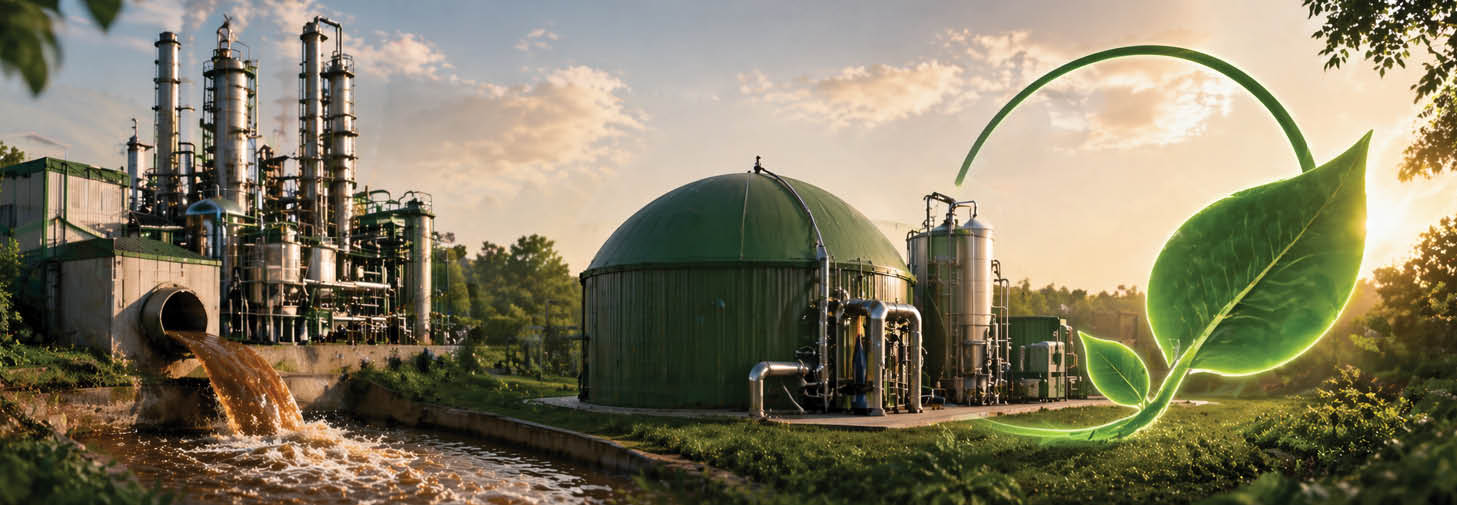
By harnessing anaerobic digestion, distilleries can convert spent wash from a problematic waste stream into a valuable source of renewable energy, significantly reducing operational costs and environmental impact.
This guide explores the science, benefits, implementation, and future outlook of biogas production from distillery spent wash, offering a clear path toward a more circular and energy-independent future for the industry.
The sheer volume of spent wash generated by distilleries is staggering. A typical molasses-based distillery can produce 10 to 15 liters of spent wash for every liter of alcohol. This wastewater is characterized by high organic load (BOD/COD), low pH, and elevated dissolved solids, making its treatment both costly and environmentally sensitive.
At the same time, distillation is energy-intensive, requiring substantial heat and electricity. Converting this waste into energy through producing biogas from distillery streams creates a strong operational synergy; turning a liability into a dependable energy resource.
Understanding Distillery Spent Wash: A Complex Organic Matrix
Distillery spent wash, also referred to as vinasse or stillage, is the residual liquid left after the distillation of fermented mash used to produce alcoholic beverages and biofuels.
Its composition varies significantly depending on the raw materials used (molasses, grains, potatoes, etc.) and the fermentation process. The key characteristics of distillery spent wash and their implications for biogas production are summarized below:
|
Parameter
|
Typical Value / Range
|
Why It Matters
|
Impact on Biogas Production
|
|---|---|---|---|
|
BOD (Biochemical Oxygen Demand)
|
40,000 – 60,000 mg/L
|
Indicates high organic load
|
High biogas potential but risk of overload if not controlled
|
|
COD (Chemical Oxygen Demand)
|
80,000 – 120,000 mg/L
|
Measures total oxidizable matter
|
Requires robust anaerobic systems (e.g., UASB)
|
|
pH
|
3.5 – 5.0 (acidic)
|
Inhibits microbial activity
|
Needs neutralization before digestion
|
|
Temperature
|
70–90°C (fresh discharge)
|
Too high for microbes
|
Cooling required for stable digestion
|
|
Total Dissolved Solids (TDS)
|
High
|
Indicates salt concentration
|
Can inhibit microbial performance if excessive
|
|
Color & Composition
|
Dark, melanoidin-rich
|
Complex, non-biodegradable compounds
|
Slower degradation, may require pre-treatment
|
|
Nutrient Content (K, N, P)
|
High potassium, variable N & P
|
Essential for microbial growth
|
May need nutrient balancing for optimal digestion
|
|
Volume Generation
|
10–15 L per L of alcohol
|
Large waste load
|
Requires scalable treatment systems
|
These characteristics make spent wash both a challenge and an opportunity; requiring careful process control while offering significant potential for energy recovery. If not managed effectively, however, these same characteristics can lead to serious environmental consequences.
The environmental implications of untreated spent wash discharge are severe, leading to water pollution, oxygen depletion in receiving water bodies, and harm to aquatic ecosystems. Traditional treatment methods, such as aerobic biological treatment or evaporation, are often energy-intensive and expensive, adding to the operational burden of distilleries.
The Science Behind Biogas Production: Anaerobic Digestion
Biogas production from distillery operations leverages the process of anaerobic digestion (AD), a natural biological mechanism in which microorganisms break down biodegradable organic matter in the absence of oxygen. This process is particularly well-suited for treating distillery spent wash, given its high organic content and biodegradability.
To better visualize how this transformation takes place; from spent wash to useful energy, the overall process flow is illustrated below:
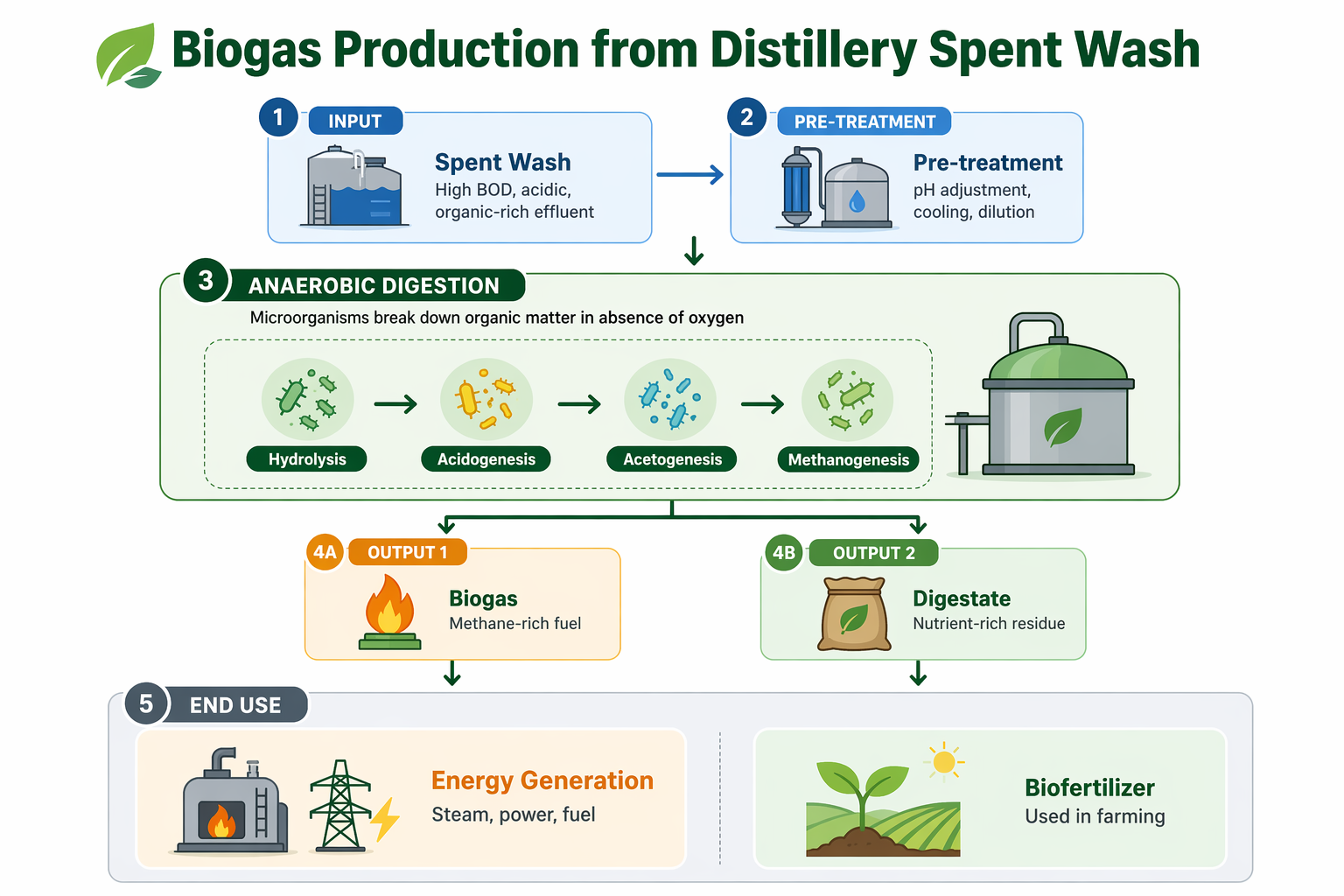
The process occurs in several stages, driven by different groups of microorganisms, each playing a specific role in breaking down complex organic compounds:
- Hydrolysis: Complex organic matter is broken down into simpler compounds such as sugars, amino acids, and fatty acids.
- Acidogenesis: These compounds are converted into volatile fatty acids, alcohols, and gases like CO2 and H2S.
- Acetogenesis: Intermediate products are further transformed into acetic acid, hydrogen, and carbon dioxide.
- Methanogenesis: Methanogenic microorganisms convert these compounds into methane-rich biogas.
As these stages progress, organic matter is gradually converted into simpler compounds, ultimately leading to the generation of methane-rich biogas.
Why Anaerobic Digestion is Ideal for Spent Wash
The high organic content and the presence of readily biodegradable compounds in spent wash make it an excellent substrate for anaerobic digestion. While low pH and high VFA concentration can pose initial challenges, these can be managed through process optimization and, where required, co-digestion with other organic substrates.
The anaerobic digestion process offers several advantages over other spent wash treatment methods:
- Waste Reduction: Significantly reduces the organic load (BOD/COD), often achieving removal efficiencies of over 80%.
- Energy Generation: Produces biogas, a renewable energy source that can be used for heat and power generation.
- Nutrient Recovery: The digestate is a nutrient-rich residue that can be used as a biofertilizer, supporting circular resource use.
- Reduced Odor: Anaerobic conditions minimize the release of volatile compounds responsible for odor issues.
- Lower Sludge Production: Compared to aerobic processes, AD produces significantly less sludge, reducing disposal costs.
Implementing Biogas Production in Distilleries: Key Considerations and Technologies
Successfully implementing biogas systems in distilleries requires careful planning and the selection of appropriate technologies. Key considerations include:
1. Pre-treatment of Spent Wash
Before entering the anaerobic digester, spent wash often requires pre-treatment to optimize the digestion process and prevent inhibition:
To better visualize how this transformation takes place; from spent wash to useful energy, the overall process flow is illustrated below:
- pH Neutralization: Adjusting the pH to a neutral range (6.8–7.2) is crucial for methanogenic activity. This is typically achieved by adding lime (calcium hydroxide) or other alkaline substances.
- Dilution: Depending on the concentration of inhibitory compounds (such as VFAs or certain salts), dilution with water or less concentrated wastewater streams may be necessary.
- Nutrient Balancing: While spent wash is rich in potassium, it may lack essential nutrients like nitrogen or phosphorus for optimal microbial activity. Blending with other waste streams or adding supplements may be required.
- Temperature Control: Maintaining an optimal temperature range (mesophilic: 30–38°C or thermophilic: 50–57°C) is essential for efficient digestion. Spent wash may require heating or cooling depending on its initial temperature and ambient conditions.
2. Anaerobic Digester Design and Operation
Several types of anaerobic digesters are suitable for treating distillery spent wash:
- Upflow Anaerobic Sludge Blanket (UASB) Reactors: Widely used for high-strength industrial wastewater, these systems allow wastewater to flow upward through a dense bed of granular sludge. Microorganisms break down organic matter, producing biogas collected at the top. UASBs are efficient, compact, and energy-efficient but require careful control to avoid shock loads.
- Anaerobic Fluidized Bed (AFB) Reactors: In AFB systems, biomass attaches to small carrier particles that are fluidized by wastewater flow. This provides a large surface area for microbial growth, enabling high loading rates and efficient treatment.
- Anaerobic Plug Flow (APF) Reactors: These are simpler, typically rectangular systems where wastewater moves in a plug-like flow. They are robust and can handle variable influent characteristics but may require larger space and longer retention times.
- Anaerobic Hybrid Reactors: Combinations of different reactor types; such as UASB followed by an anaerobic filter; can enhance treatment efficiency and handle complex waste streams more effectively.
The choice of digester depends on factors such as spent wash characteristics, treatment goals, available space, capital investment, and operational expertise.
3. Biogas Utilization
Once produced, biogas can be utilized in several ways:
- Direct Combustion for Heat: Commonly used in boilers to generate steam for distillation or heating, reducing reliance on fossil fuels and lowering emissions.
- Combined Heat and Power (CHP): Biogas fuels engines or turbines to produce electricity and heat simultaneously, improving overall energy efficiency.
- Biomethane Production (Upgrading): Biogas can be purified by removing CO2, H2S, and moisture to produce biomethane. This can be used as vehicle fuel or injected into gas grids, requiring specialized upgrading systems.
4. Digestate Management
The digestate; the residue remaining after anaerobic digestion is a valuable by-product:
- Biofertilizer: Rich in nutrients such as potassium, nitrogen, and phosphorus, digestate can be applied to agricultural land, reducing dependence on synthetic fertilizers.
- Nutrient Recovery: Advanced systems can recover specific nutrients (e.g., potassium salts) as valuable by-products.
- Further Treatment: Depending on regulations and end use, digestate may require additional treatment such as dewatering or aerobic polishing.
Benefits of Biogas Production from Distillery Waste
Generating biogas from distillery spent wash offers a compelling array of economic, environmental, and operational benefits:
Economic Advantages
- Reduced Energy Costs: Generating on-site renewable energy significantly reduces electricity and fuel bills, especially with rising fossil fuel prices in 2026.
- Lower Waste Disposal Costs: Treating spent wash is expensive. Anaerobic digestion transforms this cost into a revenue-generating or cost-saving opportunity.
- Potential Revenue Streams: Upgraded biomethane can be sold to the grid or used as vehicle fuel. Recovered nutrients can also be marketed as biofertilizers.
- Government Incentives: Many governments offer subsidies, tax credits, or feed-in tariffs for renewable energy production, further enhancing the economic viability of such systems.
- Carbon Credits: Reduced reliance on fossil fuels and effective waste management can qualify distilleries for carbon credits, providing an additional revenue stream.
Environmental Advantages
- Greenhouse Gas Emission Reduction: Replacing fossil fuels with biogas significantly cuts CO2 emissions. Capturing methane from wastewater also prevents its release into the atmosphere, where it is a potent greenhouse gas
- Water Pollution Prevention: Effective treatment of spent wash prevents the discharge of pollutants into rivers and groundwater, protecting aquatic ecosystems and human health.
- Reduced Landfill Burden: Treating wastewater on-site minimizes the need for transporting and disposing of sludge or treated effluent.
- Circular Economy Contribution: Generating biogas from distillery waste supports circular economy principles by converting waste into energy and fertilizer, reducing reliance on virgin inputs.
- Improved Local Environment: Reduced odor and visual pollution associated with wastewater treatment.
Operational Advantages
- Energy Independence: On-site energy generation reduces reliance on external energy suppliers, providing greater control over energy supply and costs.
- Enhanced Corporate Social Responsibility (CSR): Demonstrates a strong commitment to environmental sustainability, improving brand image and stakeholder relations.
- Compliance with Regulations: Helps distilleries meet increasingly stringent environmental regulations regarding wastewater discharge and emissions.
- Resource Efficiency: Optimizes resource utilization by converting waste streams into valuable outputs.
Challenges and Mitigation Strategies
Despite the numerous benefits, implementing biogas systems in distilleries can present certain challenges:
High Capital Investment: The initial cost of installing anaerobic digestion (AD) plants and biogas utilization equipment can be substantial.
Mitigation: Phased implementation, leveraging government grants and subsidies, exploring energy performance contracts, and partnering with specialized biogas developers.
Operational Complexity: Managing AD systems requires skilled personnel and continuous monitoring.
Mitigation: Investing in staff training, using advanced process control and monitoring systems (SCADA), and engaging experienced O&M service providers.
Variability in Spent Wash Composition: Fluctuations in raw materials and fermentation processes can affect spent wash characteristics, impacting biogas yield and digester stability.
Mitigation: Implementing robust pre-treatment systems, real-time monitoring of key parameters (pH, VFA, alkalinity), and co-digestion with more stable waste streams where required.
At the forefront of carbon recovery innovation, companies like Hypro have established a strong global footprint across both distillery and biogas domains.
With a portfolio of installations spanning diverse geographies, Hypro has delivered CO2 recovery plants from distilleries in Azerbaijan (300 kg/hr) and Uganda (1500 kg/hr), alongside biogas-based recovery systems; including 8 kg/hr and 300 kg/hr units in Switzerland.
By enabling carbon capture from both distillery processes and biogas systems; independently or in combination; such solutions support a more circular approach, where emissions are captured and converted into valuable industrial resources.
Digestate Disposal/Utilization: Identifying suitable applications for digestate can be challenging due to logistics and regulatory requirements.
Mitigation: Developing nutrient management plans, partnering with local farmers, investing in dewatering or nutrient recovery technologies, and ensuring compliance with environmental regulations. For detailed guidance, resources from agricultural ministries or environmental agencies can be valuable.
The Future of Biogas in Distilleries
The shift toward sustainability and circular economy practices is accelerating, making the adoption of distillery-based biogas systems not just viable but increasingly essential. Several advancements are shaping the future:
- Improved Digester Technologies: Development of more efficient, compact, and robust digester designs, including membrane-based systems and intensified processes.
- Advanced Biogas Upgrading: More cost-effective and energy-efficient technologies for producing high-purity biomethane.
- Integration with Other Waste Streams: Co-digestion of spent wash with other organic wastes (e.g., food waste, agricultural residues) to enhance biogas yield and stability.
- Digitalization and AI: Increased use of sensors, data analytics, and artificial intelligence for optimizing anaerobic digestion, enabling better process control and predictive maintenance.
- Nutrient Recovery Innovations: Technologies to extract higher-value products from digestate, moving beyond basic biofertilizer applications.
A Sustainable Path Forward
In 2026, the need for distilleries to adopt sustainable practices is stronger than ever. Converting distillery waste into biogas offers a practical and integrated solution to the persistent challenges of spent wash management and energy demand.
By leveraging anaerobic digestion, distilleries can transform a costly waste stream into renewable energy and nutrient-rich by-products, reducing environmental impact while improving operational efficiency and economic resilience.
While challenges exist, they can be effectively managed through careful planning, appropriate technology selection, and strong operational practices. The transition toward a more circular and sustainable distillery industry is already underway, and producing biogas from distillery streams is set to play a central role in this transformation.
Related Posts
Advanced CO2 recovery technology for Biogas efficiency.
At Hypro, we have pioneered a cutting-edge solution for CO2 recovery from biogas, ensuring that...
Read More
Biogas vs Green Hydrogen: Companions or Competitors in the Clean Energy Revolution?
Biogas and green hydrogen are two promising renewable energy sources, each with unique advantages and...
Read More
Industrial Biogas: Why Carbon Outcomes Differ from Municipal Systems
Biogas is often labelled sustainable, but carbon outcomes vary widely in practice. This article examines...
Read More