
#coal #PowerPlant #CO2 #sustainability #carbonfootprint
Advances in Coal-fired Power Plant Emissions Control Technologies
Coal-fired power remains a cornerstone of global electricity generation, supplying approximately 36% of the world’s electricity demand as of 2023 (IEA). Particularly in emerging economies where energy security and affordability are paramount, coal-fired facilities continue to play a pivotal role in stabilizing national grids and meeting industrial load requirements.
Against a backdrop of intensifying climate commitments, tightening regulatory frameworks, and escalating stakeholder expectations – from investors to consumers – emissions control in coal-fired operations is no longer optional. It is a strategic imperative shaping the future viability of coal as an energy source.
To understand how the industry is responding to this challenge, we must first examine the core pollutants emitted by coal-fired plants and the control strategies being deployed to mitigate their impact.
Emissions profile of coal-fired facilities
Coal-fired facilities remain among the most scrutinized industrial sources of atmospheric emissions. A precise understanding of their emissions profile is essential for formulating effective control strategies that address both regulatory compliance and environmental sustainability.
Particulate matter (PM), predominantly in the form of fly ash and unburned carbon residues, poses another serious concern. Without emission controls like electrostatic precipitators or baghouse filters, PM concentrations in flue gas can reach 50–150 mg/Nm3.
Additionally, trace elements such as mercury (Hg), arsenic, and volatile organic compounds (VOCs) further compound the environmental footprint of coal-fired operations.
Emission volumes from coal-fired facilities are influenced by several factors:
- Coal type – Bituminous and lignite coals differ significantly in sulfur and ash content
- Combustion technology – Pulverized coal, fluidized bed, or IGCC systems each impact emission characteristics
- Plant efficiency – Ultra-supercritical plants emit less per kWh than subcritical counterparts
Advanced emissions control technologies in coal-fired power plants
Flue Gas Desulfurization (FGD)
Dry and semi-dry FGD variants exist, but wet systems dominate due to higher efficiency and scalability. Installation costs typically range from $100–250/kW, with operational considerations including slurry management, reagent availability, and byproduct handling.
Electrostatic Precipitators (ESP)
ESPs are highly effective for particulate matter control, achieving 99% removal of even fine PM fractions. The core mechanism involves imparting an electrostatic charge to particles, which are then attracted to oppositely charged collection plates.
Compared to baghouse filters, ESPs handle higher flue gas volumes with lower pressure drop but may exhibit lower efficiency on ultrafine particles (<2.5 μm). Modern ESP systems are optimized with pulse energization and rapping mechanisms for enhanced performance and reduced maintenance. These systems are integral to particulate emissions compliance, particularly in older coal-fired facilities.
Selective Catalytic Reduction (SCR)
SCR is extensively adopted in Asia and EU regions due to stringent NOx standards. Key considerations include ammonia slip control, catalyst deactivation rates, and operational temperatures (300–400°C) to maintain optimal reaction kinetics and minimize byproduct formation.
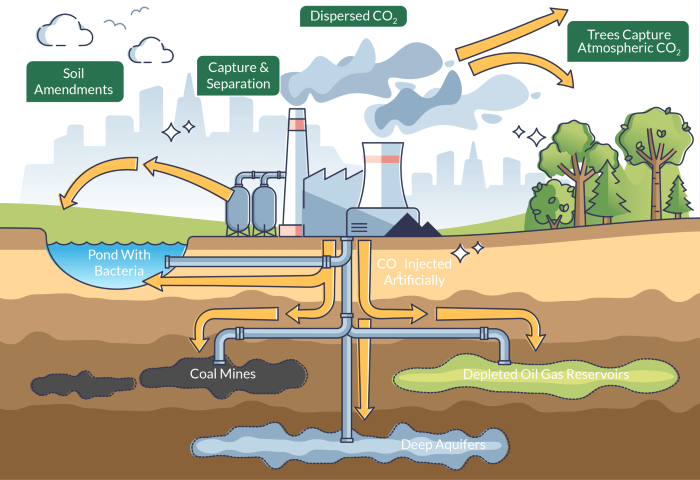
Carbon Capture and Storage (CCS)
Challenges and future outlook for coal-fired emissions control
Despite substantial technological advancements, controlling emissions in coal-fired power plants remains fraught with challenges that complicate both implementation and long-term sustainability.
First, the capital and operational expenditure (CapEx and OpEx) associated with emissions control technologies is considerable. For example, installing flue gas desulfurization (FGD) systems can cost between $100 and $300/kW of capacity, depending on plant size and technology type (World Bank, 2019).
Similarly, integrating carbon capture and storage (CCS) can escalate a plant’s levelized cost of electricity (LCOE) by 30–40% due to the significant energy demand of capture systems (IEA, 2021).
Second, retrofitting older coal-fired facilities poses structural and logistical difficulties. Aging infrastructure may lack the spatial and engineering provisions required for new installations, especially CCS units that demand large absorber columns and compression stations.
Additionally, emissions control systems often introduce a parasitic energy load – for CCS, this can be 15–30% of a plant’s output, directly impacting efficiency and profitability (Global CCS Institute, 2022).
Third, regulatory and policy uncertainty continues to hinder confident investment. While carbon pricing mechanisms such as the EU ETS and US 45Q tax credits incentivize capture, fluctuating policy landscapes create ambiguity about long-term returns.
Looking ahead, future-proofing strategies are emerging. Biomass co-firing (up to 30%) can reduce net CO2 emissions, and pioneering trials in ammonia co-firing (notably in Japan) suggest new pathways for decarbonization.
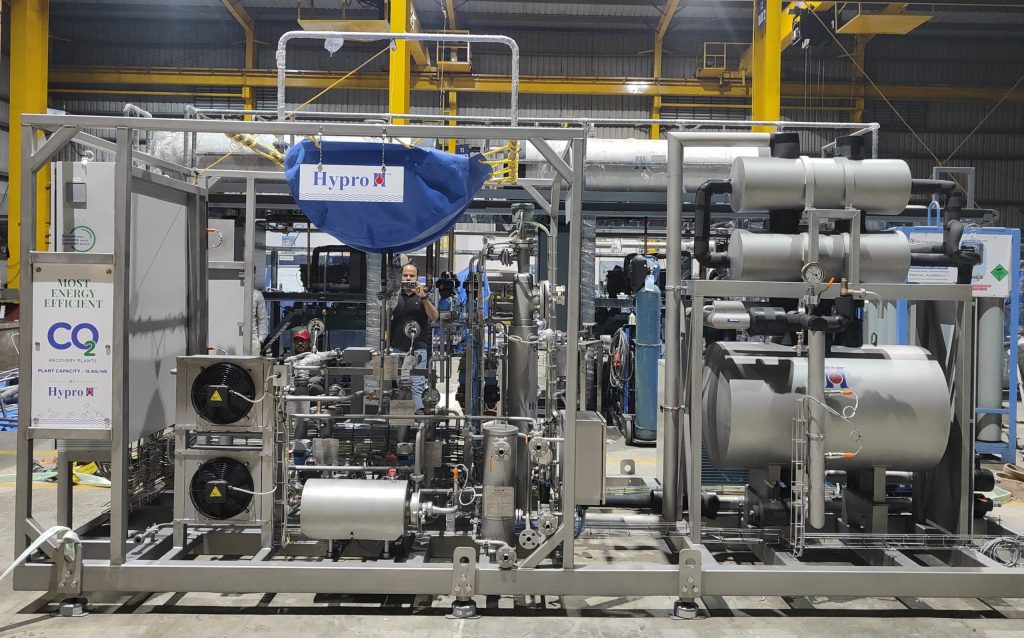
Moreover, integrating CO2 recovery solutions, such as Hypro’s high-purity capture systems, can offset compliance costs by creating revenue streams from food-grade CO2 sales.
As regulatory pressures tighten and technological innovations mature, operators of coal-fired plants will need to adopt multi-faceted strategies that balance compliance, cost-efficiency, and sustainability.
Innovative CO2 recovery solutions by Hypro
Designed to recover CO2 directly from the flue gas streams of coal-fired boilers, Hypro’s plant delivers an exceptional purity level of 99.998% v/v, qualifying the recovered CO2 as food-grade.
This ultra-pure CO2 finds immediate application across diverse sectors – including beverage carbonation, pharmaceutical manufacturing, and food processing – opening viable commercial avenues for what was once an atmospheric pollutant.
Actionable pathways for cleaner coal-fired operations
As the global energy landscape shifts toward decarbonization, the imperative to control emissions from coal-fired facilities has never been more urgent. For an industry that still underpins over a third of global electricity supply, reconciling operational demands with environmental stewardship is a complex, but necessary task.
By recovering high-purity CO2 directly from flue gas, such systems transform regulatory compliance into a value-generating opportunity – supporting both environmental goals and revenue diversification.
For industry leaders and decision-makers, the time to act is now. With the right combination of technology, policy alignment, and strategic foresight, coal-fired facilities can transition toward cleaner, more sustainable operations – balancing energy security with environmental responsibility.
Related Posts
From Pollution to Profit: How Power Plants Can Monetize Recovered CO2
Power plants are among the biggest CO2 emitters, but what if they could turn pollution into profit? With advanced CO2 recovery technology, emissions can become...
Read MoreIndustrial Energy Optimisation in the Age of Carbon Pricing

Carbon pricing is reshaping industrial cost structures by embedding emissions directly into operating and capital decisions. This article examines how combustion efficiency, carbon capture, and...
Read MoreEngineering Sustainability: Every Day is Earth Day at Hypro

Hypro believes Earth Day is more than a moment - it’s a mission. From sustainability-driven innovations to CO2 recovery and digital transformation, discover how Hypro...
Read More