CIP - Clean in Place
an industrial brewery equipment
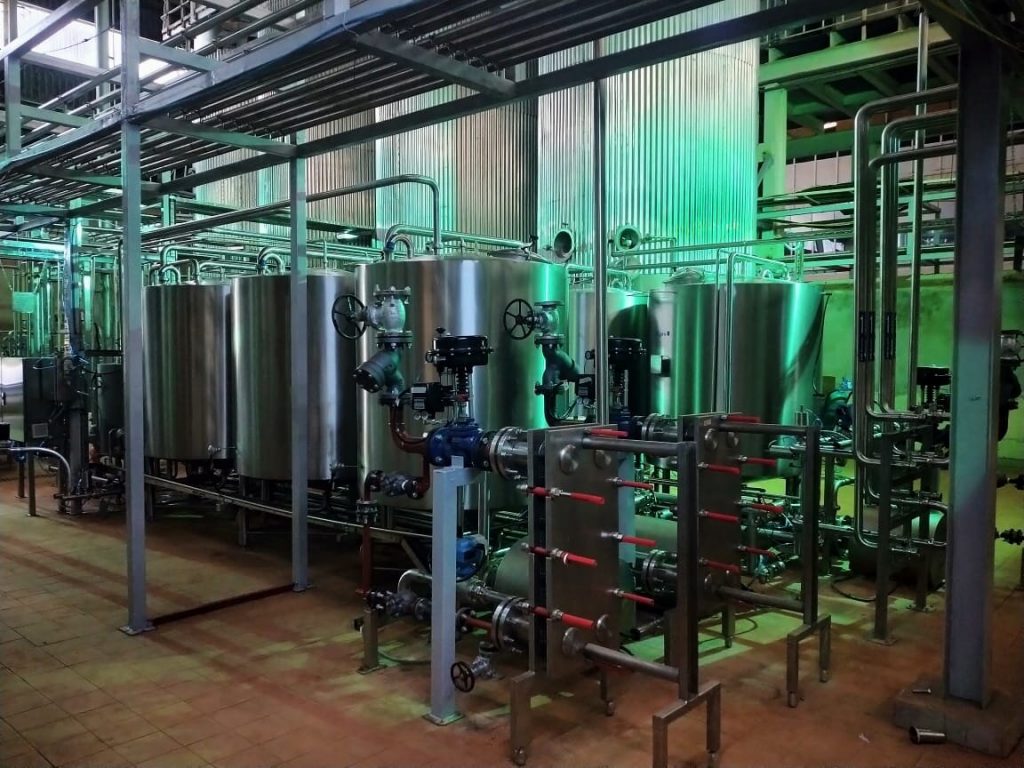
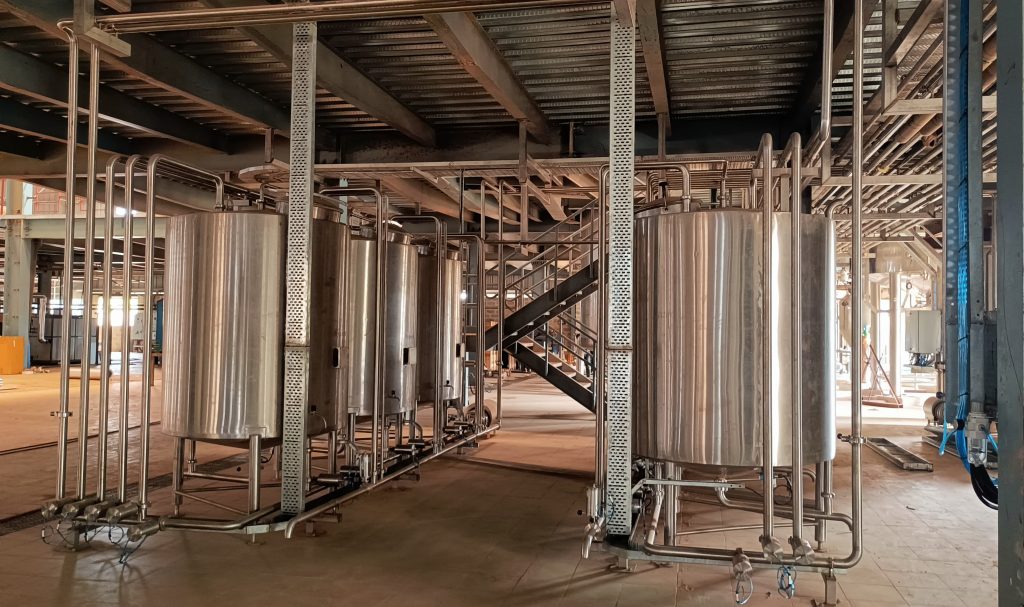
CIP plants are critical in any hygienic process industry. The success of a CIP plant depends on its design, particularly in terms of flow, temperature, pressure, and concentration. Hypro offers both centrally built CIP stations and section-wise dedicated CIP to suit different process requirements.
Each CIP plant is carefully designed after evaluating the cleaning requirements, which vary from process to process depending on soiling conditions. Cleaning devices are selected appropriately to match the application and ensure effective cleaning.
When designing a CIP plant for existing vessels, attention is given not only to the CIP plant itself but also to the vessel construction to ensure effective cleaning. Poorly designed vessels with dead legs, inaccessible areas, or shadow zones can become sources of contamination, regardless of how advanced the CIP plant may be.
Hygienic design and construction of pipework are critical to the effectiveness of a CIP plant. Poorly designed or constructed pipework with dead legs can create several opportunities for cross-contamination. With its strong industry presence and proven designs, Hypro CIP stations take all key design aspects into consideration to facilitate effective CIP operations.
The CIP plants are equipped with adequate instrumentation to deliver the required temperature, flow, pressure, and concentration of CIP solutions to the equipment being cleaned. By maintaining the correct solution concentration, water consumption during CIP is also reduced by avoiding unnecessary drainage.
Tank configurations are selected based on CIP requirements, followed by the appropriate selection of supply pumps and heaters. Choosing the right CIP return pump is equally important, and Hypro always uses self-priming pumps for CIP return applications. The CIP systems are supplied with pre-programmed CIP cycles loaded into the PLC for user-friendly operation. Multiple combinations are provided to facilitate different CIP cycles based on process requirements.
CIP systems circulate cleaning solutions through a cleaning circuit consisting of pipework, vessels, machines, and other associated equipment. It is good practice to design equipment with fewer parts and without areas that detergents cannot reach or where fluids can accumulate. This helps reduce cleaning time while saving water, chemicals, and energy.
Cleaning is carried out using cleaning devices or spray balls installed inside vessels and equipment. The pressure and flow rate at which CIP is performed are critical parameters and must be maintained to ensure effective tank cleaning. Various types of cleaning devices are used depending on the tank diameter, including static spray balls, rotary spray balls, and cleaning jets.
- Designed to Hygienic Industry Standards: Hypro CIP tanks are designed in accordance with sound engineering practices and hygienic industry norms.
- Built to Proven Engineering Standards: Mechanical design follows relevant ASME Section VIII requirements and Good Engineering Practices (GEP). Where standards do not provide specific guidance, proven industry experience is applied.
- Optimized Process Design: Heat transfer areas are designed using Hypro’s proprietary computer-based design program and follow recognized Hygienic Process Design and Practice principles.
- Suitable for Outdoor Installation: Designed to operate reliably in outdoor environments.
- Utility Routing Through Insulation: Glycol piping, dome drain piping, and cable conduits are routed through the insulation.
- Rigid Hygienic Product Piping Design: Product piping follows a rigid piping concept with flow plates, ensuring stable and reliable operation.
- Complete Cylindroconical Tank Construction: Cylindroconical tanks are supplied as a complete assembly comprising the shell, top cone, and bottom cone.
- Insulated for Hot Water and Hot Caustic Applications: Hot Water and Hot Caustic tanks are insulated to minimize heat loss and maintain required process temperatures.
- Temperature Monitoring for Hot Fluids: One thermo-well is provided on the shell for a temperature indicator on Hot Water and Recovered Water tanks to monitor fluid temperature.
- Simplified Design for Ambient Temperature Chemicals: Cold Caustic, Acid, and Water tanks do not require insulation or temperature transmitters, reducing system complexity and cost.
- Protection Against Overfilling and Dry Running: All CIP tanks are equipped with high-level and low-level transmitters to prevent overfilling and empty-run conditions.
- Integrated Sampling Facility: Diaphragm-type sample valves allow operators to collect samples and measure fluid concentration through sampling.
- CIP Supply Pipe Routed Through Insulation: In the CIP Cellar, the supply pipe from the operating level to the tank top is routed through the insulation.
- Dome Drain Pipe Routed Through Insulation: The dome drain pipe running from the tank top to the top of the slab is routed through the insulation.
- Cable Conduits Routed Through Insulation: Cable conduit pipes are routed through the insulation.
- Hygienic Stainless Steel Process Piping: Hygienic process piping, fittings, and butterfly valves are manufactured in OD-based SS 304 material for wort, beer, yeast, CO2, air vent, CIP supply, and CIP return services.
We would love to see you on social media!
Significance of CIP
After each batch operation, the internal surfaces and walls of vessels can accumulate residues such as product fluid, sticky materials, foam, yeast, and other deposits. Over multiple batches, these residues may form layers that create favorable conditions for microbial growth and contamination. The frequency of CIP is determined by the brewer or plant operator, although weekly cleaning is generally preferred.
In breweries and other hygienic process industries, the CIP section plays a critical role, as vessels are in direct contact with food products and beverages. Maintaining a hygienic, germ-free environment inside the vessels and ensuring effective tank cleaning are essential for product quality, process reliability, and contamination control.
Standard Cleaning Sequence
- Pre Flush -Rinsing.
- Caustic circulation.
- Intermediate Flush- Rinsing.
- Acid circulation.
- Disinfectant circulation.
- Final Flush-Rinsing.