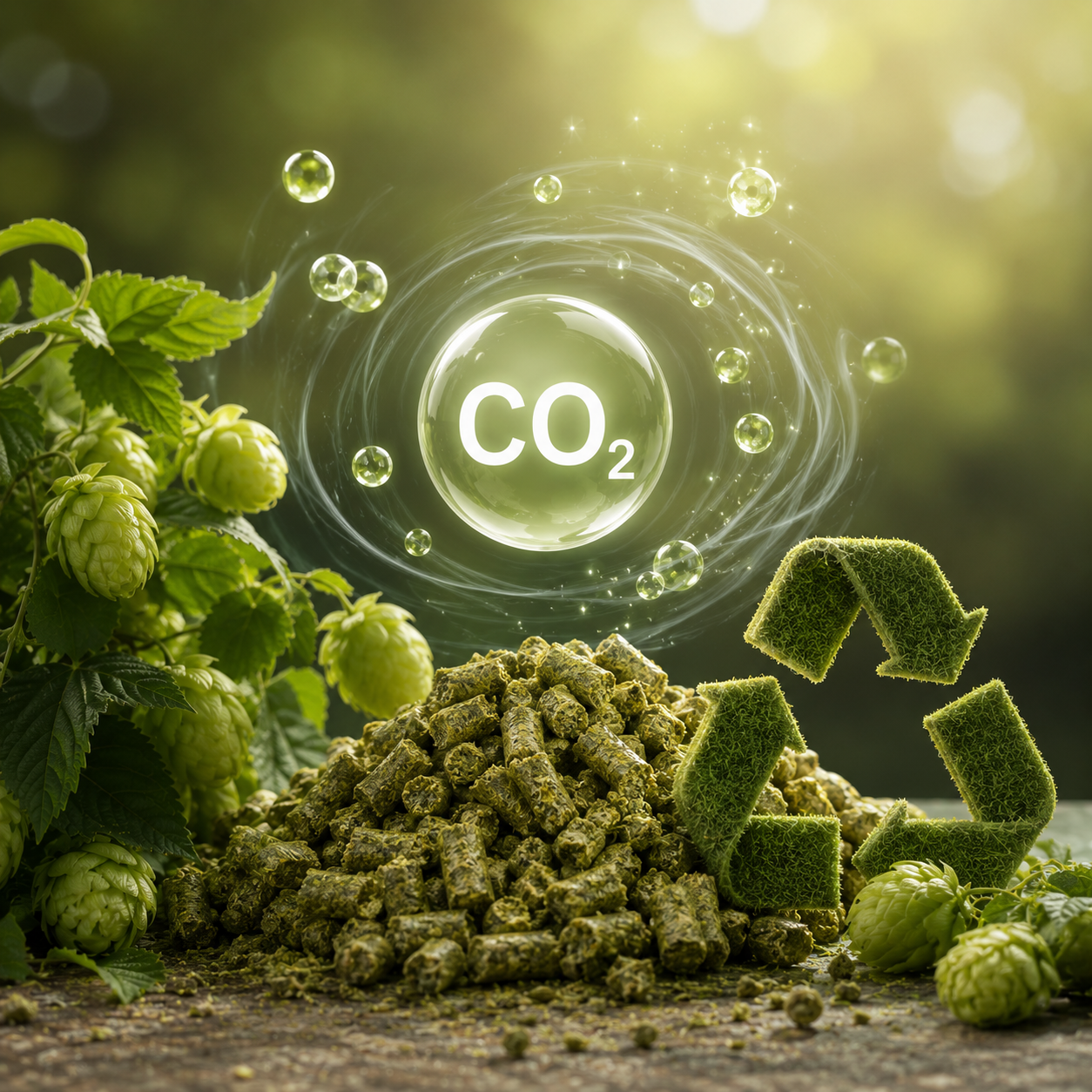
Supercritical CO2 Recovery Plant
Hops Extraction
Conceptualized by Hypro MD Ravi Varma, the system is a one-of-a-kind development, bringing together a distinctive approach to CO2 recovery with indigenous engineering capabilities. Hypro Engineers undertook the design, development, and manufacturing of the plant, translating the concept into a specialized industrial solution.
- Capacity: Up to 700 kg/hr.
- High CO2 purity: Achieves CO2 purity exceeding 99.997% v/v.
- Low-pressure operation: Operates at less than 260 psi, compared with 600 to 900 psig in traditional systems.
- Energy saving: Nearly 40% of the CO2 processed requires no compression or pumping energy.
- Compact CO2 collection system: Averages process peaks, enabling a smaller and more compact CO2 collection system.
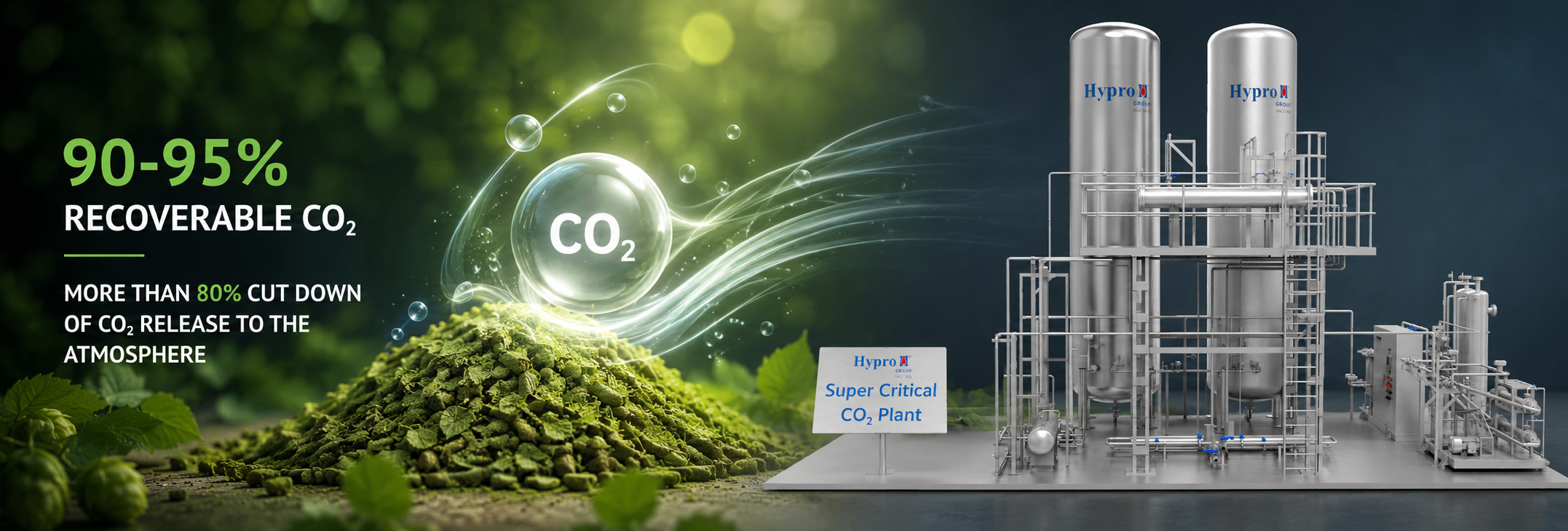
- High recovery efficiency: Recovers more than 90 to 95% of recoverable CO2.
- Extended equipment life: Protects purification and compression equipment from hop oils and hop dust, supporting longer equipment life.
- Reduced CO2 emissions: Cuts CO2 release to the atmosphere by more than 80%.
- Reduced dependence on purchased CO2: Helps reduce daily requirements for new CO2 purchases and supports lower greenhouse gas emissions.
CO2 discharged from the hops extractors is vented at high pressure, typically between 700 and 900 psig, depending on the hops variety and extraction process parameters. This CO2 contains hop oils, hop dust, other hydrocarbon traces, oxygen, and moisture, which are introduced during the supercritical hops extraction process
The primary challenge in CO2 recovery is the rapid release of a substantial quantity of CO2, approximately 1,500 to 1,700 lb per batch, within just 20 minutes. To manage this high-pressure discharge, the supercritical CO2 recovery system first captures more than 80 to 90% of the released CO2 in two pressure buffer tanks. The first stage operates at 150 to 350 psig, while the second operates at 15 to 65 psig. These buffer tanks subsequently release the collected CO2 at a controlled outflow for purification.
The purification process begins with the separation of dust, oil mist, liquid droplets, and aerosols through coalescing filtration, with separation performance down to less than 0.1 µm. The CO2 is then passed through adsorption towers to remove oil in vapor form, other vapor-phase hydrocarbons, and moisture. The gas is dried to a dew point below -76°F, and odor compounds are removed.
Following purification, the CO2 is fed into condensation equipment, where the CO2 vapors are condensed into liquid CO2. The resulting liquid CO2 is then distilled in a distillation column to remove oxygen. The purified CO2 is collected in the day liquid CO2 receiver and pumped back into the hops extraction process for reuse. The process achieves a CO2 purity exceeding 99.997% v/v, enabling the recovered CO2 to be recycled within the extraction process.
- Easy to operate and maintain
- Simple and reliable
- Continual plant operation over long time periods
- Cut down on greenhouse gas emissions and contribute to a greener and cleaner earth
We would love to see you on social media!
Compare with similar products
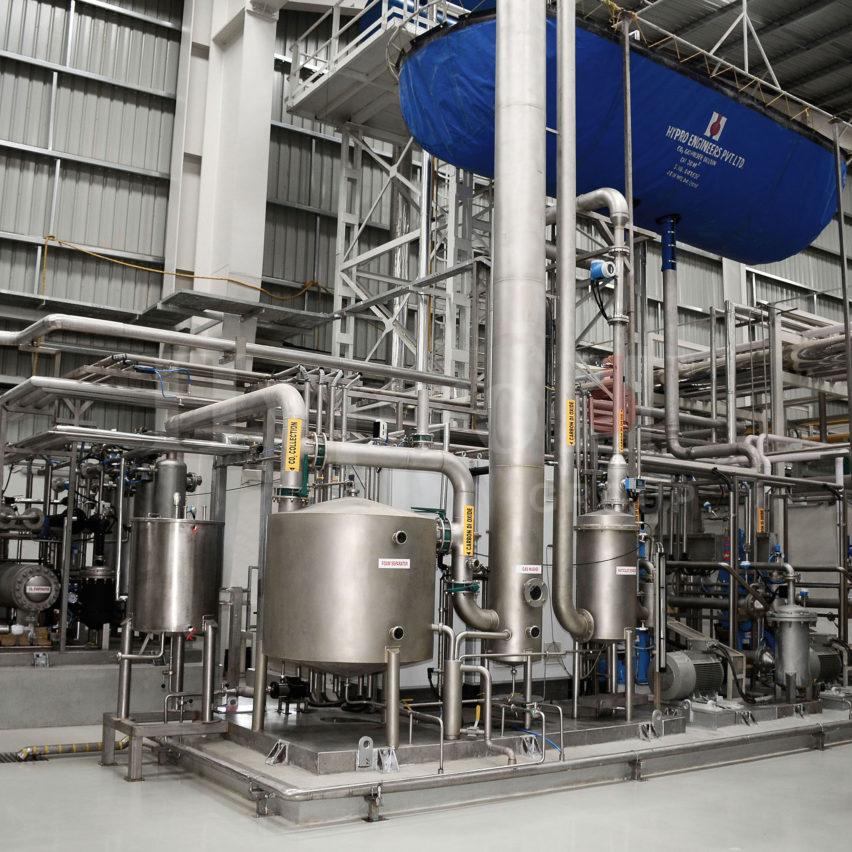
MEE CO2 Recovery System
- 150 kg/hr and above Liquid CO2 produced
- Recovers CO2 from Breweries, Distilleries, and Wineries
- Ideal for large scale production

Supercritical CO2 Recovery Plant
- Up to 700 kg/hr CO2 produced
- Ideal for Supercritical Hops Extraction
- Ideal for large scale production
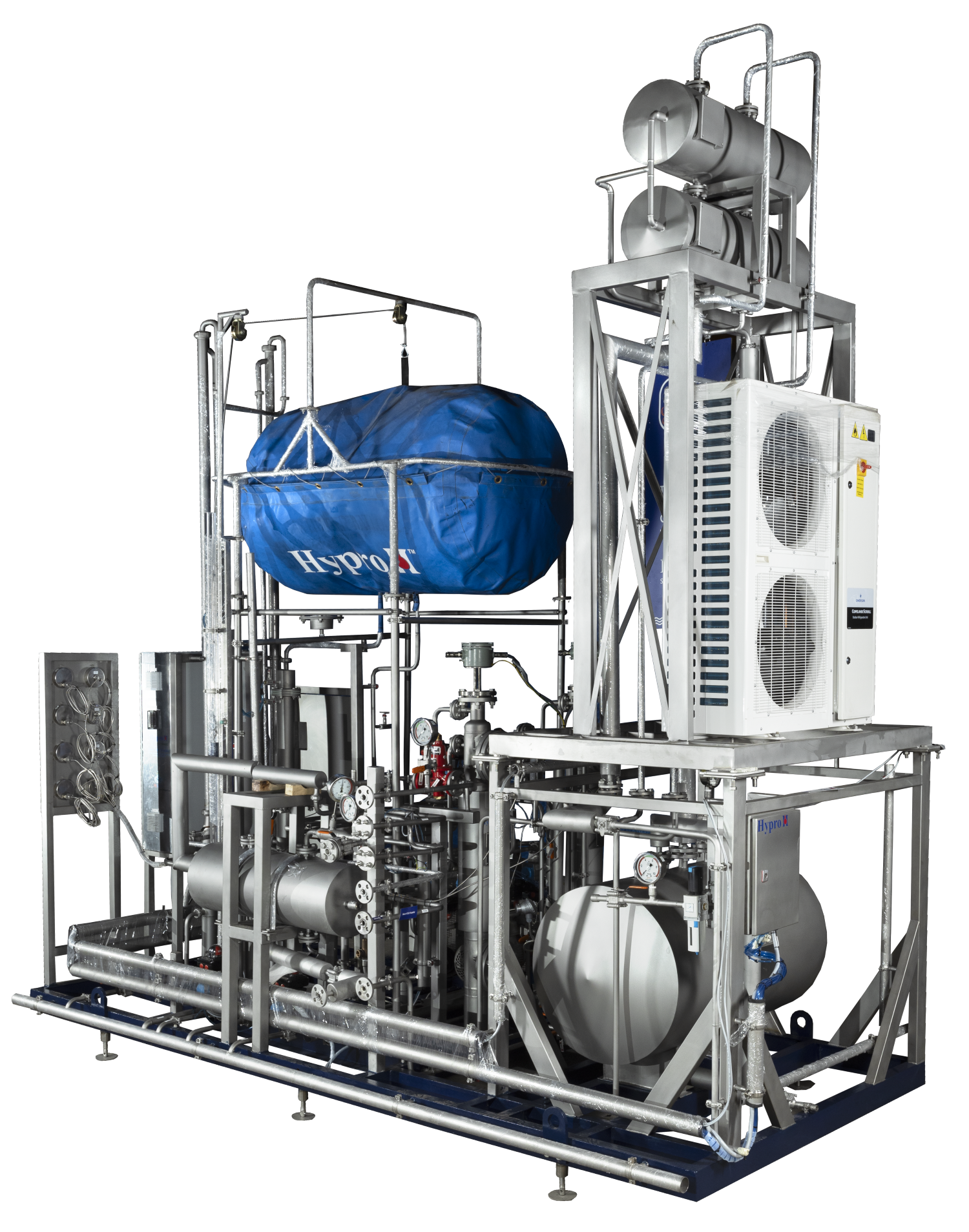
Hypro HyCrCTM
- 15 kg/hr and above Liquid CO2 produced
- Recovers CO2 from Micro/Pub/Craft Breweries
- Ideal for small scale production
Frequently Asked Questions.
CO2 contains hop oils, hop dust, other hydrocarbon traces, oxygen, and moisture as impurities in it.
The purification step involves dust separation, oils mist or liquid droplets, aerosols separation by coalescing down to less than 0.1 um. The CO2 is then fed to adsorption towers for separation of oil in vapor form, other vapor hydrocarbons, and moisture.
If on average 20,000 lb CO2 was released to the atmosphere per day then this system would capture and recycle more than 16,000 lb/ day which means that the CO2 emissions to the atmosphere would be cut down to 16,000 lb/day. The purchase of fresh CO2 will now be no more than 4,000 lb/day.
Super Critical CO2 Extraction kills all microbial bacteria, mold, and insects which results in pure Hops Extract.