#CO2 #cement #netzero #sustainability #carbonNeutral
Net zero Cement Plants: What the Plant of 2050 Will Actually Look Like
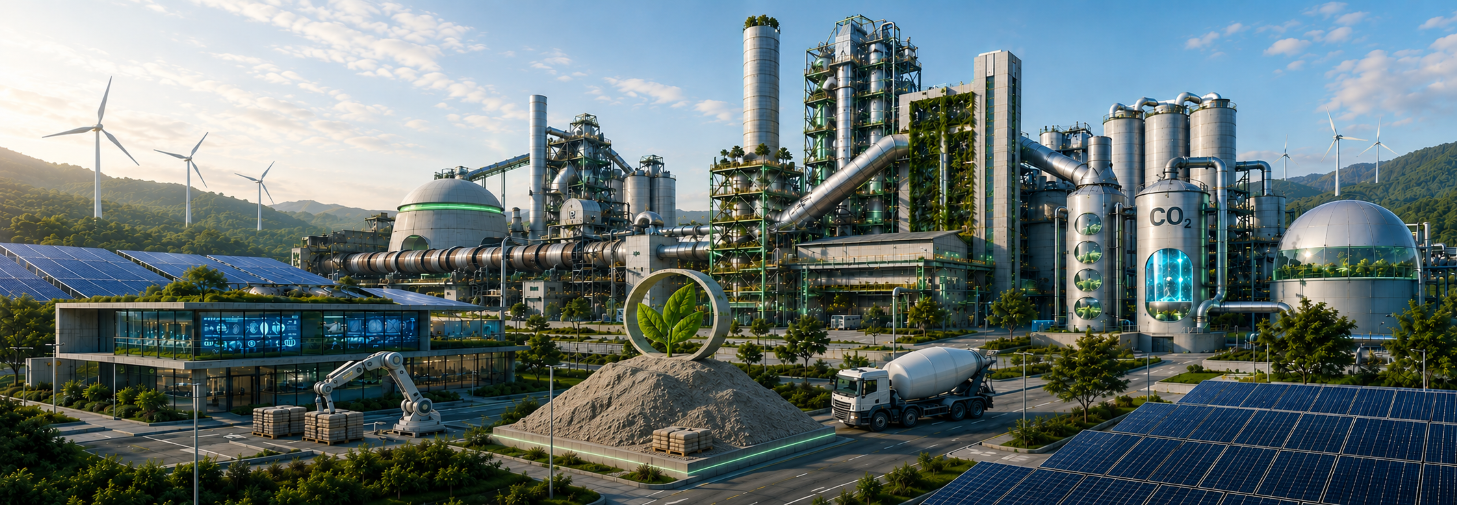
As infrastructure demand rises with urbanization, the challenge is no longer whether cement will remain essential, but how net zero cement production can become commercially and technically viable by 2050.
This shift requires rethinking the cement plant itself. A future-ready facility must move beyond being only a clinker producer and evolve into an integrated low-carbon industrial ecosystem. Through electrified processes, carbon capture, alternative fuels, digital optimization, and energy recovery, Net zero Cement plants will likely balance productivity with deep decarbonization.
Traditional cement manufacturing remains carbon-intensive because emissions come from both fuel combustion and limestone calcination. Reducing these sources will be central to scaling net zero cement systems that support global construction without carrying the same carbon cost. By 2050, the cement plant may no longer be viewed as a major emitter, but as a smarter, cleaner foundation of modern industry.
Why traditional cement plants are carbon-intensive
Breaking down the emissions: a multi-faceted challenge
1. Process Emissions: The Unavoidable CO2 from Limestone
The most significant and challenging emissions arise directly from the chemical transformation of raw materials. This category is dominated by:
2. Fuel Emissions: Firing the Kiln with Fossil Fuels
The enormous energy required to reach calcination temperatures has historically been supplied by burning fossil fuels. This leads to significant emissions:
The sheer volume of fuel required to maintain the high temperatures in a rotary kiln means that fuel combustion is a major contributor to the overall carbon footprint.
3. Power Emissions: Energizing the Plant's Operations
Beyond the kiln itself, cement plants are vast industrial sites with numerous energy-consuming processes:
Grinding, Material Handling, and Plant Utilities: The grinding of raw materials and the final cement product, the transportation of materials within the plant (conveyors, loaders), and the operation of various plant utilities (fans, pumps, dust collectors, lighting) all require substantial electrical power.
The dawn of low-clinker cements: reshaping the foundation
The realization that process emissions from limestone calcination are unavoidable has driven innovation towards reducing the clinker content in cement. This paradigm shift is fundamentally reshaping raw material systems and the very definition of cement.
Future plants may depend less on traditional clinker
Instead of relying solely on clinker for its binding properties, future cement formulations will incorporate a higher proportion of supplementary cementitious materials (SCMs).
Key SCMs that will feature prominently in future plants include:
- Fly Ash: A byproduct of coal combustion in power plants. Its pozzolanic properties make it an excellent substitute for clinker.
- Slag: A byproduct of iron and steel manufacturing (ground granulated blast furnace slag, GGBFS). It offers similar cementitious properties.
- Calcined Clay: Natural clays, when heated at lower temperatures than limestone (around 700-900°C), release their chemically bound water and become reactive pozzolans. This requires less energy than clinker production and generates less CO2 per ton of material.
- Limestone Fillers: Finely ground limestone can be added to cement blends, acting as a filler and contributing to early strength development. While it does not have the same binding properties as clinker, its inclusion reduces the clinker factor.
Limestone calcined clay cement (LC3): a leading contender
A particularly promising development is Limestone Calcined Clay Cement (LC3). This innovative cement combines calcined clay (rich in kaolinite) and limestone, with a typical blend of around 50% calcined clay, 30% clinker, and 20% limestone. LC3 leverages the synergistic reactivity of these components.
The fuel system will look completely different
The reliance on coal and petcoke for kiln heat is perhaps the most visible change in a net zero cement plant. The fuel system of 2050 will be a testament to circular economy principles and the adoption of low-carbon energy sources.
Beyond coal dependency: a diverse energy mix
Instead of vast stockpiles of coal, future plants will manage a diverse array of alternative fuels:
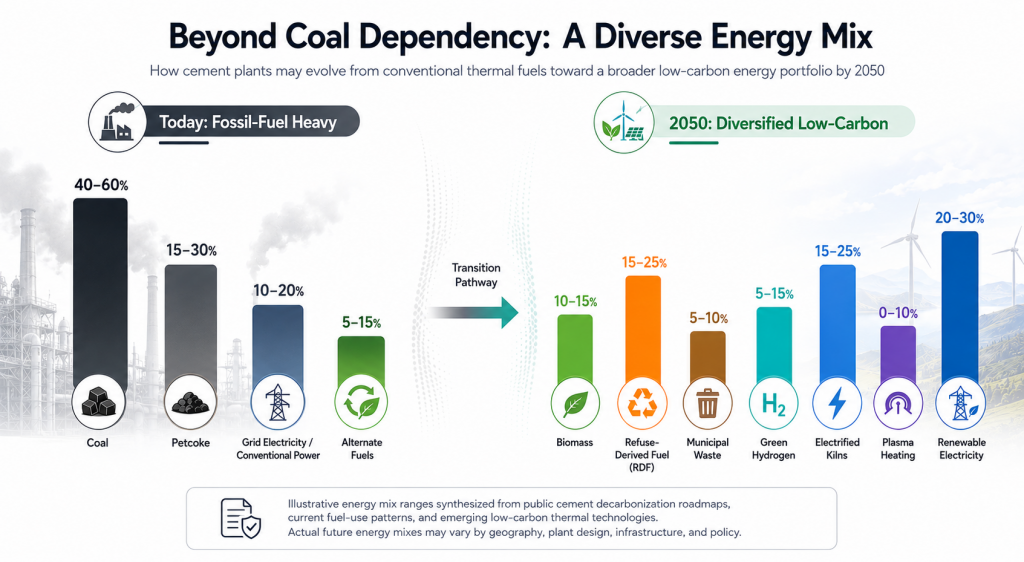
Biomass: Sustainably sourced biomass, such as agricultural residues, forestry waste, and dedicated energy crops, can be used as a fuel source. Its carbon neutrality depends on sustainable sourcing and lifecycle emissions accounting.
Refuse-Derived Fuel (RDF): Processed municipal solid waste (MSW) and industrial waste can be converted into RDF. This not only provides energy but also diverts waste from landfills, aligning with circular economy goals. Careful sorting and processing are crucial to ensure consistent quality and minimize hazardous emissions.
Municipal Waste: Direct combustion of certain types of processed municipal waste is also a viable option, offering significant waste diversion benefits.
Green Hydrogen: While currently expensive and requiring substantial infrastructure, green hydrogen produced from renewable electricity is a long-term prospect for decarbonizing high-temperature processes like cement production. It offers the potential for zero-emission combustion, producing only water vapor.
Electrified Kilns: In regions with abundant renewable electricity, kilns may be directly electrified. This requires significant technological advancements in kiln design and electrical heating systems capable of reaching and maintaining the required 1450°C. Induction heating or electric resistance heating could be employed.
Plasma Heating: Emerging technologies utilizing plasma torches can generate extremely high temperatures efficiently. While still in developmental stages for large-scale cement production, plasma heating offers a potential pathway to intense, controlled heat with lower emissions.
The handling, preparation, and feeding systems for these alternative fuels will be sophisticated, requiring advanced sorting, shredding, drying, and blending technologies to ensure consistent combustion characteristics and efficient energy transfer. Automated systems will manage the complex fuel mix in real-time.
Waste heat becomes a valuable asset, not a loss
Traditional cement plants are notoriously inefficient, with a significant portion of the heat generated escaping into the atmosphere. Future plants will view these thermal losses not as waste, but as a valuable resource.
Capturing thermal losses for multiple benefits
Future plants will likely incorporate sophisticated waste heat recovery systems to capture thermal energy for various purposes:
- Steam Generation: Waste heat from the kiln and clinker cooler can be used to generate high-pressure steam. This steam can be used directly in preheating raw materials, drying fuels, or driving turbines for power generation.
- Power Generation: The generated steam can drive turbines connected to generators, producing electricity for on-site consumption or even export to the grid. This significantly reduces the plant’s reliance on external electricity sources and their associated emissions.
- Process Reuse: Recovered heat can be used for various preheating and drying stages within the cement production process itself, reducing the primary fuel demand. This creates a more integrated and energy-efficient system.
These waste heat recovery systems will involve advanced heat exchangers, economizers, and potentially Organic Rankine Cycle (ORC) units for efficient electricity generation from lower-temperature heat sources.
AI-driven plants: the brains behind the operation
The complexity of managing diverse fuels, optimizing energy use, ensuring quality with reduced clinker, and integrating carbon capture requires a level of operational intelligence far beyond current capabilities. Artificial Intelligence (AI) and advanced digital technologies will be the central nervous system of the net zero cement plant.
Real-time optimization and predictive power
AI will permeate every aspect of plant operation:
Predictive Maintenance: Sensors embedded throughout the plant will continuously monitor equipment health. AI algorithms will analyze this data to predict potential failures before they occur, allowing for scheduled maintenance, minimizing costly downtime, and preventing safety incidents. This moves from reactive or preventative maintenance to a truly predictive model.
AI Kiln Optimization: The kiln is the energy-intensive heart of the plant. AI will continuously monitor and adjust kiln parameters (temperature profiles, fuel mix, airflow, feed rates) in real-time based on fuel quality, raw material composition, and desired product specifications. This ensures optimal energy efficiency, stable clinker quality, and minimized emissions.
Digital Twins: A virtual replica of the physical plant, a “digital twin,” will be created and constantly updated with real-time data. This allows engineers and operators to simulate different operating scenarios, test new control strategies, train personnel, and troubleshoot issues without impacting the actual plant.
Autonomous Quality Control: Advanced sensors and AI-powered image analysis will monitor raw materials and final product quality in real-time. This allows for immediate adjustments to the production process, ensuring consistent cement quality even with variable SCMs and fuels, reducing the need for manual sampling and testing.
Carbon capture infrastructure becomes standard
Capturing the unavoidable CO2
- Flue Gas Capture (Post-Combustion): This is the most likely primary method. CO2 is separated from the flue gases exiting the kiln and other combustion processes using chemical solvents (e.g., amines) or physical adsorption methods. The captured CO2 is then concentrated.
- CO2 Enrichment: In some processes, CO2 might be intentionally concentrated within the process stream to facilitate easier capture. For example, if a process uses oxygen instead of air for combustion, the resulting flue gas will have a much higher concentration of CO2, making separation more efficient.
- Oxy-fuel Combustion: Burning fuels in pure oxygen instead of air dramatically increases the CO2 concentration in the flue gas, simplifying subsequent capture. This requires an air separation unit (ASU) to produce oxygen, which itself consumes energy.
From carbon capture to carbon utilization: where recovery creates business value
This is where advanced CO2 recovery systems become increasingly relevant. Hypro is developing specialized CO2 recovery solutions for cement plants that are designed to recover high-purity CO2 from industrial exhaust streams with a focus on operational efficiency, long-term usability, and integration with broader sustainability goals.
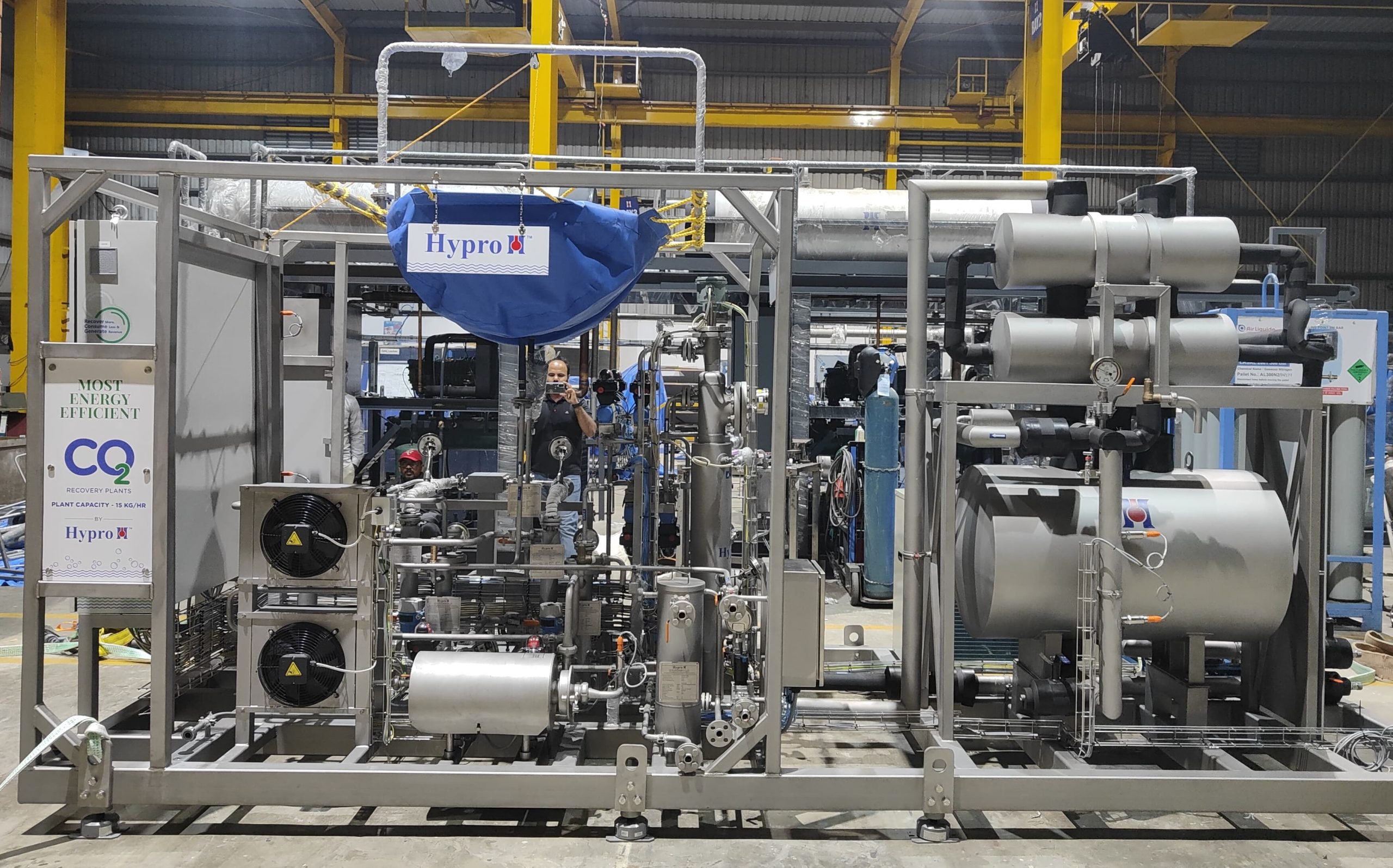
For manufacturers evaluating long-term decarbonization pathways, technologies that combine carbon reduction with economic viability will become increasingly important.
What the net zero cement plant of 2050 actually looks like
Stepping onto the grounds of a net zero cement plant in 2050 would reveal a landscape transformed. The familiar sights and sounds of traditional operations would be replaced by a symphony of advanced technologies, automation, and a clear focus on sustainability.
A transformed industrial landscape
Imagine arriving at the plant:
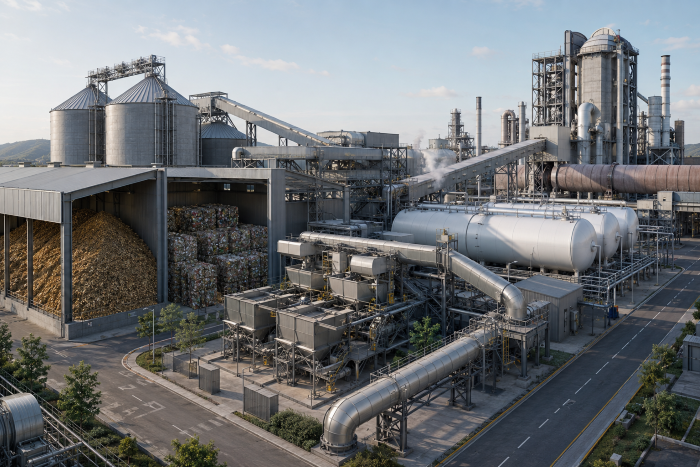
Fewer Coal Yards, More Diverse Fuel Handling: Instead of sprawling coal piles, you’d see sophisticated, enclosed facilities for receiving, processing, and storing alternative fuels like biomass pellets, RDF bales, or potentially cryogenic tanks for hydrogen. Automated systems would manage fuel blending and delivery to the kilns.
Sleek, Automated Quality Labs: Gone are the days of manual sampling and lengthy lab waits. Automated labs, equipped with advanced spectroscopic and robotic analysis tools, would provide instant feedback on raw material and product quality, directly feeding data into the AI control systems.
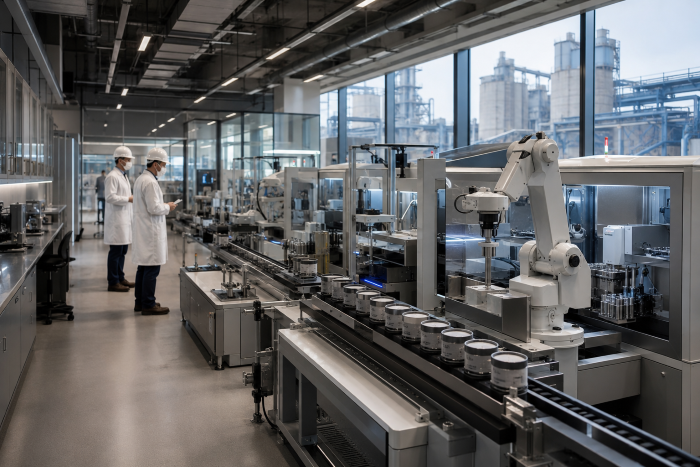
Integrated Waste Heat Systems: Visible pipework and structures would indicate extensive waste heat recovery systems, channeling thermal energy from the kiln exhaust and clinker cooler towards steam turbines and preheating units. You might see compact, efficient heat exchangers and compact power generation modules.
The Digital Monitoring Center: The traditional control room would be replaced by a state-of-the-art digital monitoring center. Here, operators and engineers would oversee the plant’s operations via vast, interactive screens displaying real-time data streams from sensors across the facility, AI performance metrics, emissions dashboards, and predictive maintenance alerts. This is the brain of the operation, where human oversight guides advanced automation.
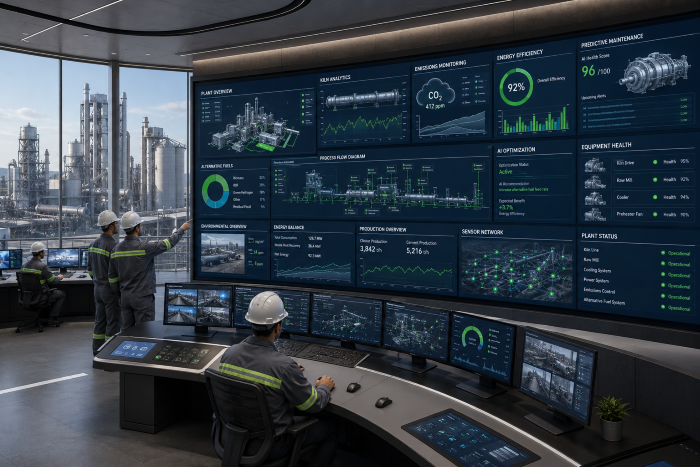
Reduced Noise and Dust: With cleaner fuels, optimized processes, and advanced dust suppression and filtration systems, the plant would likely operate more quietly and with significantly less visible dust compared to its 2026 counterparts. Enclosed conveyors and material handling systems would further minimize fugitive dust emissions.
Renewable Energy Integration: Depending on the plant’s location and energy strategy, you might see integrated solar arrays on building rooftops or adjacent land, or even small-scale wind turbines, contributing to the plant’s overall energy needs.
The net zero cement plant of 2050 is not merely a modified version of today’s facilities; it is a fundamentally redesigned industrial ecosystem. It embodies principles of circularity, energy efficiency, advanced automation, and integrated carbon management.
Challenges and opportunities ahead
The transition to net zero cement production is not without its hurdles. Developing and scaling new technologies, securing sustainable alternative fuel supplies, managing the economics of carbon capture, and retraining the workforce are significant challenges.
However, the opportunities are equally profound. The shift drives innovation, creates new green jobs, enhances energy security, and is essential for meeting global climate targets. The path to 2050 requires unprecedented collaboration between industry, government, researchers, and technology providers.
Building a sustainable future, one ton of cement at a time
The cement plant of 2050 will be a beacon of sustainable industrial practice. It will be a place where chemistry, engineering, and digital intelligence converge to produce an essential material with a minimal environmental footprint.
By embracing low-clinker formulations, diversifying its energy sources, harnessing waste heat, leveraging AI, and integrating robust carbon capture systems, the industry can successfully decarbonize.
This transformation is not just about meeting climate goals; it is about ensuring that the material that built our past and present can continue to build our future, responsibly and sustainably. The journey is complex, but the vision of a net zero cement industry is achievable, paving the way for a truly sustainable built environment.
Related Posts

Low Carbon Cement: The Next Big Leap in Sustainable Construction
By implementing Hypro’s technology, cement producers can extract high-purity CO2 directly from their production processes unlocking new revenue streams. Captured CO2 can be utilized in...
Read More
Engineering Sustainability: Every Day is Earth Day at Hypro
Hypro believes Earth Day is more than a moment - it’s a mission. From sustainability-driven innovations to CO2 recovery and digital transformation, discover how Hypro...
Read More
Environment first: A resilient circular carbon journey led by Hypro
On the World Environment Day, Hypro redefines the role of industry - not as a force that extracts, but as one that restores. With over...
Read More